Launch offer — valid today only

📄 Digital book in PDF · read it on your phone or print it

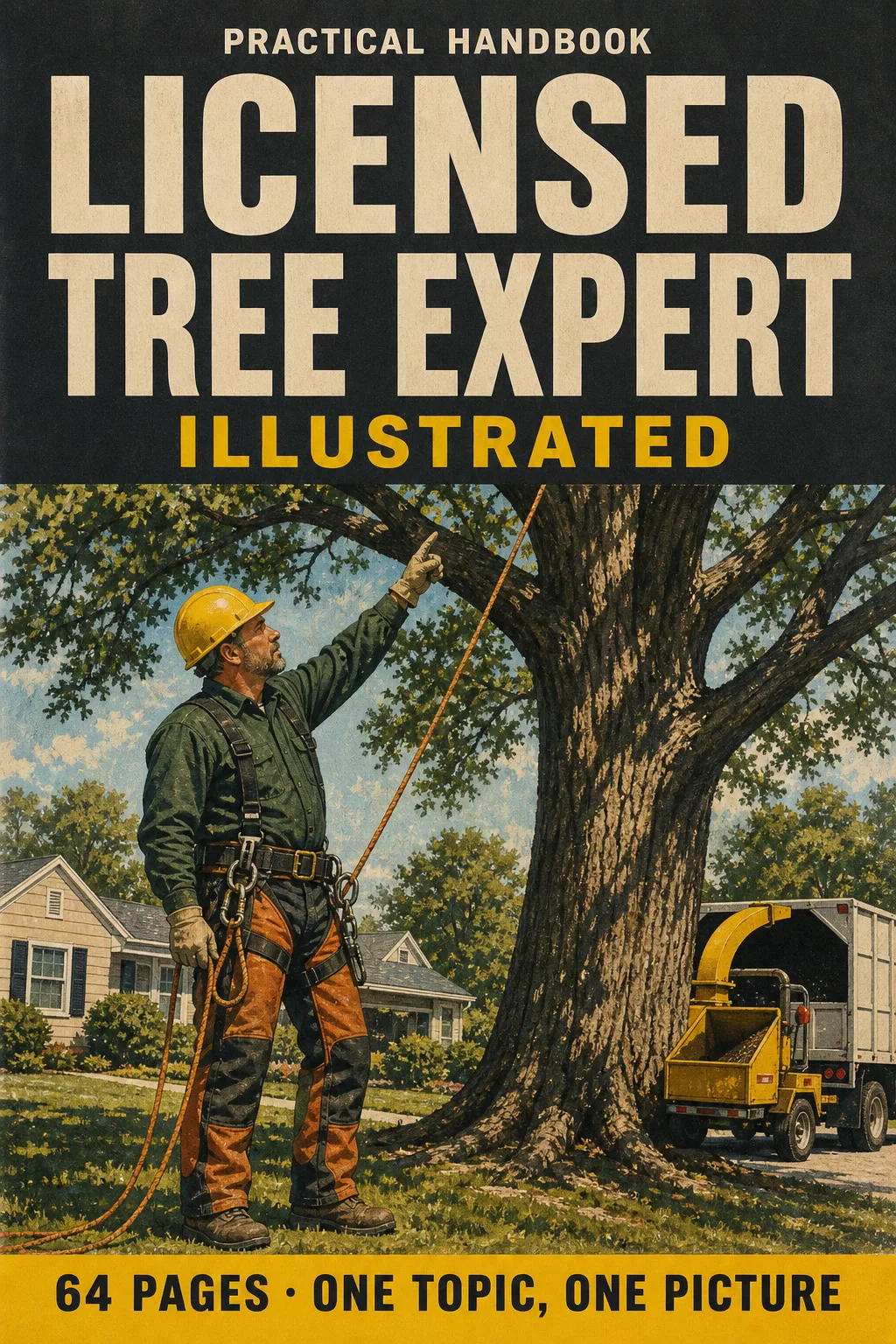
The State Tree Expert Exam in Drawings: Every Cut, Defect and Safety Rule You Need to Know One Topic on Every Page

Trunk anatomy, tree ID, soils, pruning cuts, risk assessment, pests, pesticide math, Z133 safety and felling. Every topic gets its own page: the drawing first, then what you need to remember. 64 illustrated pages.

START STUDYING THIS WAY

🔒 Secure checkout · PDF by email · 30-day guarantee

Every topic, its own pageEach cut, defect and safety rule drawn, with the explanation right beside it
64 illustrated pages8 parts, from inside the trunk to the last-week review
Up-to-date sourcesANSI A300, ANSI Z133 and your state board's study material
PDF by emailFormat

Look Inside the Book

Every page has one big drawing and a box with the numbers, cuts and rules you need to know:

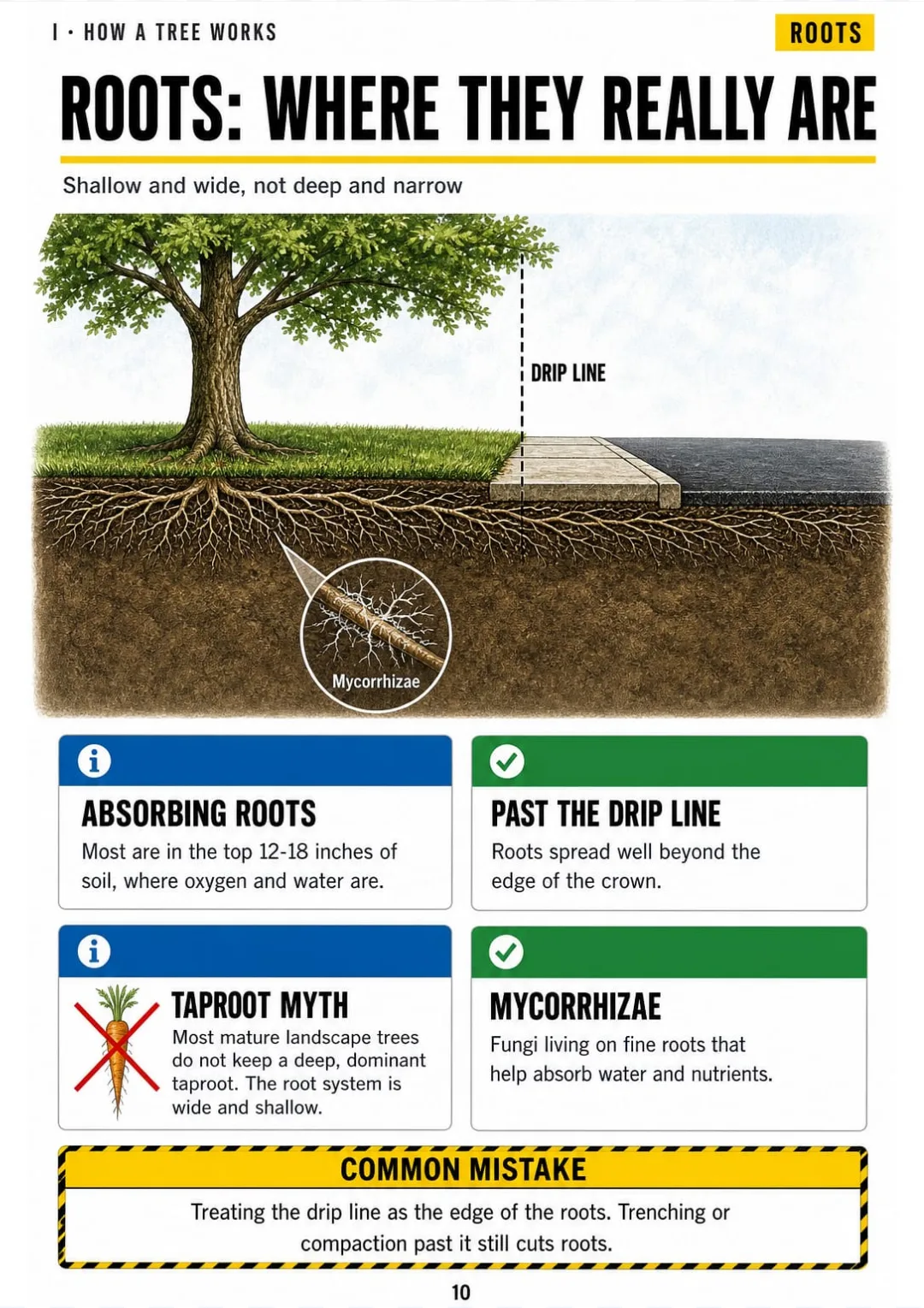
Most absorbing roots: top 12-18 in of soil, spreading past the drip line.
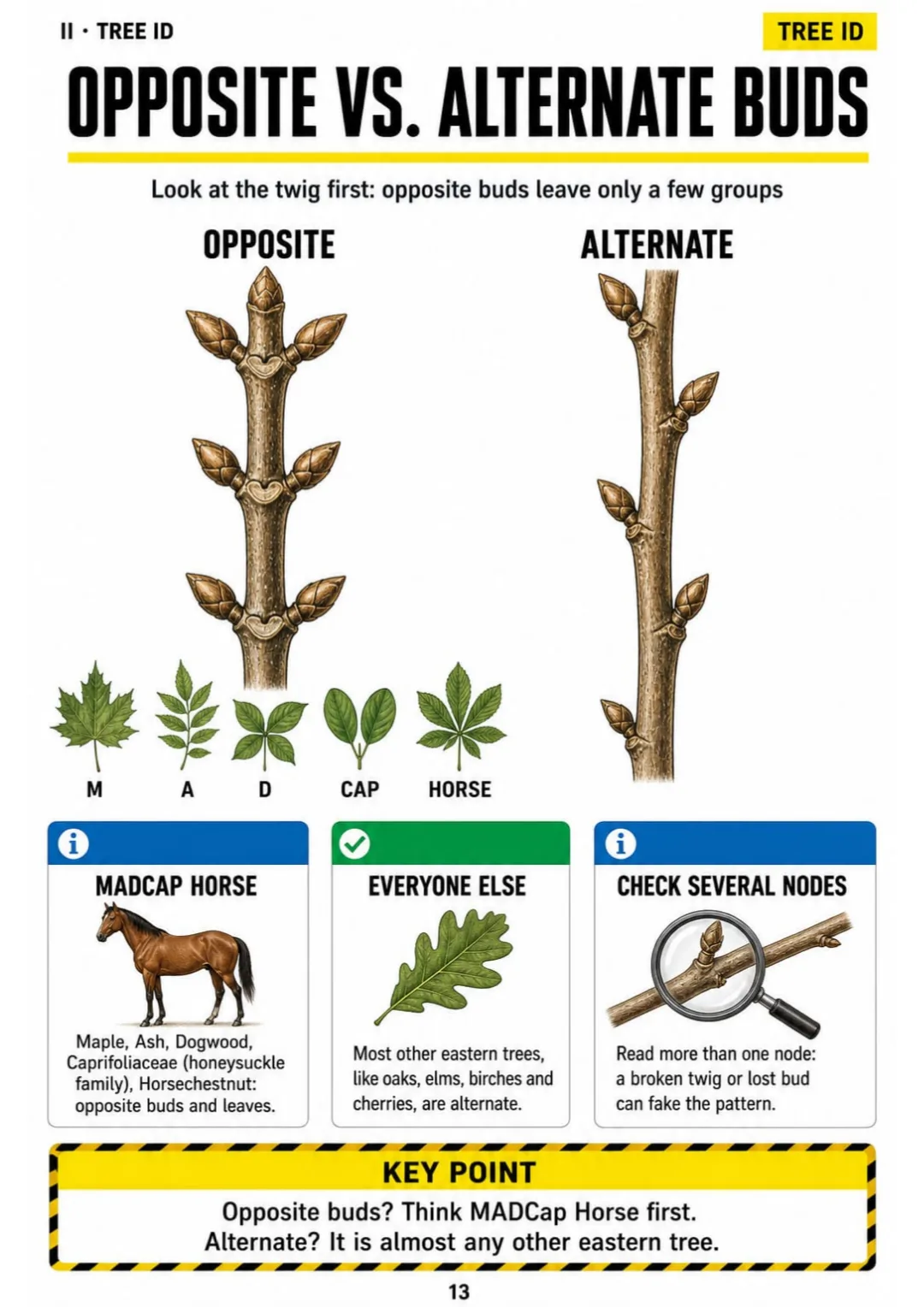
Opposite buds = Maple, Ash, Dogwood, Caprifoliaceae, Horsechestnut. Almost everything else is alternate.
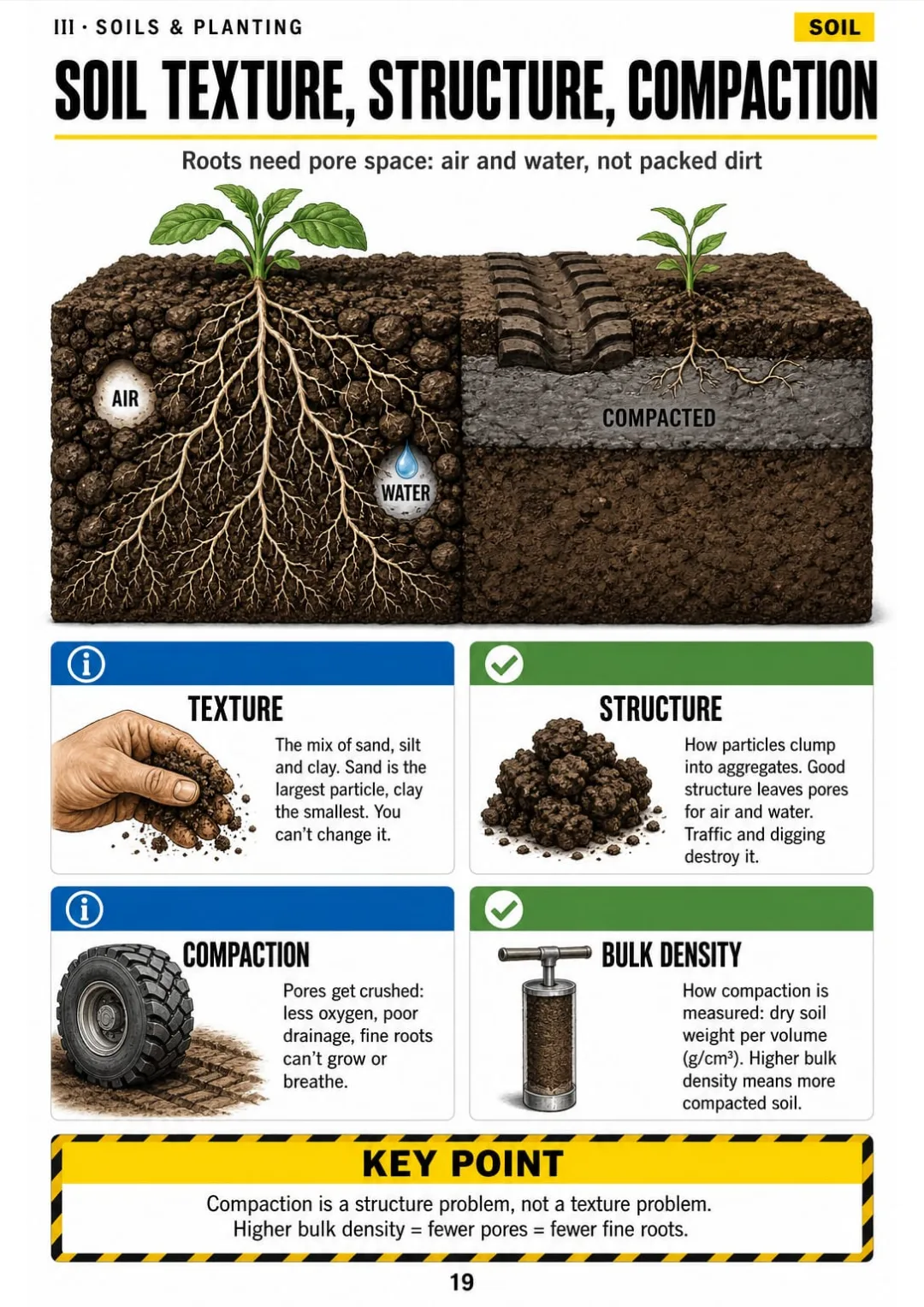
Sand, silt, clay, pore space and bulk density: the soil terms on one page
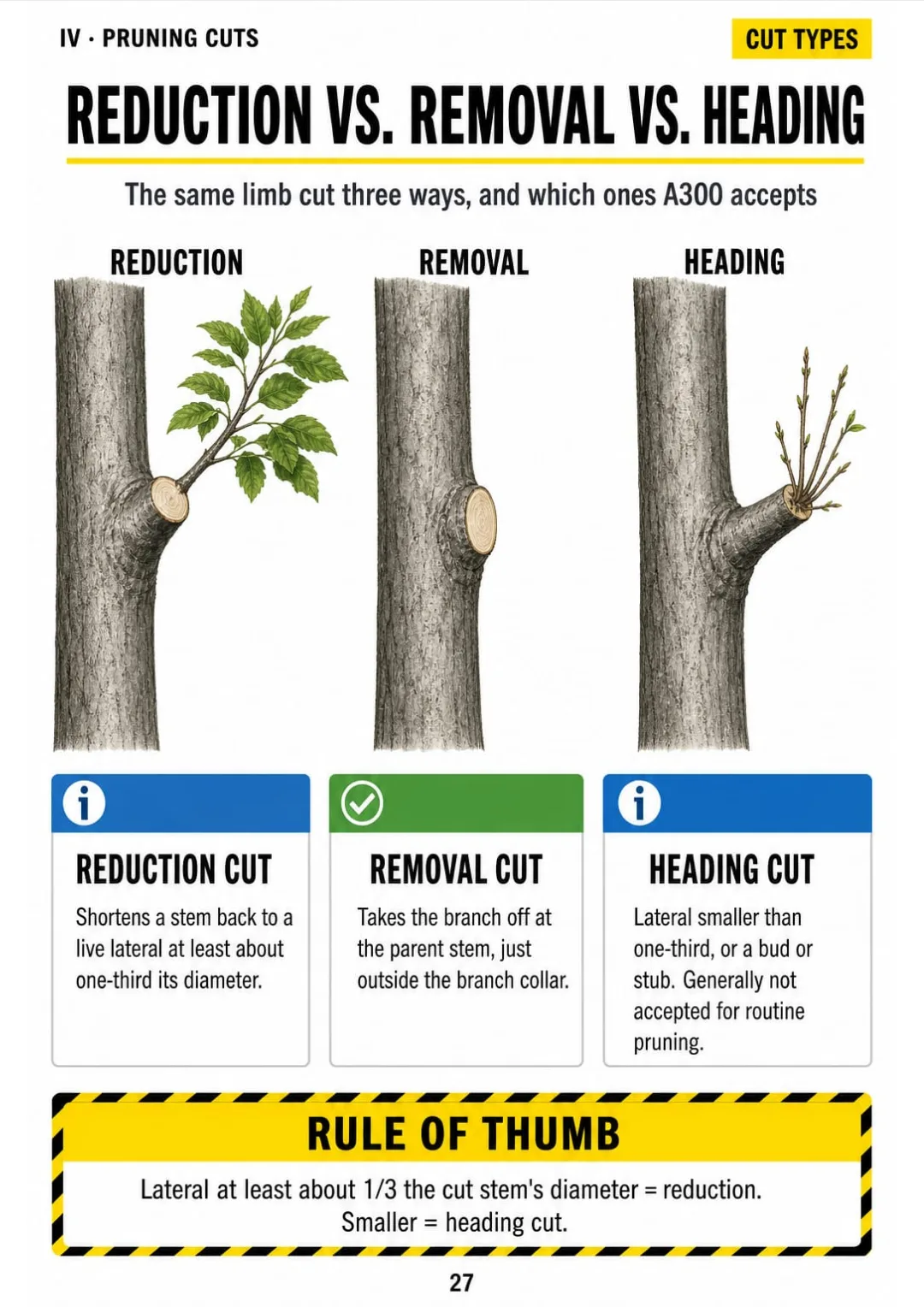
Reduction: back to a lateral ≥ about 1/3 the diameter. Smaller = heading cut.
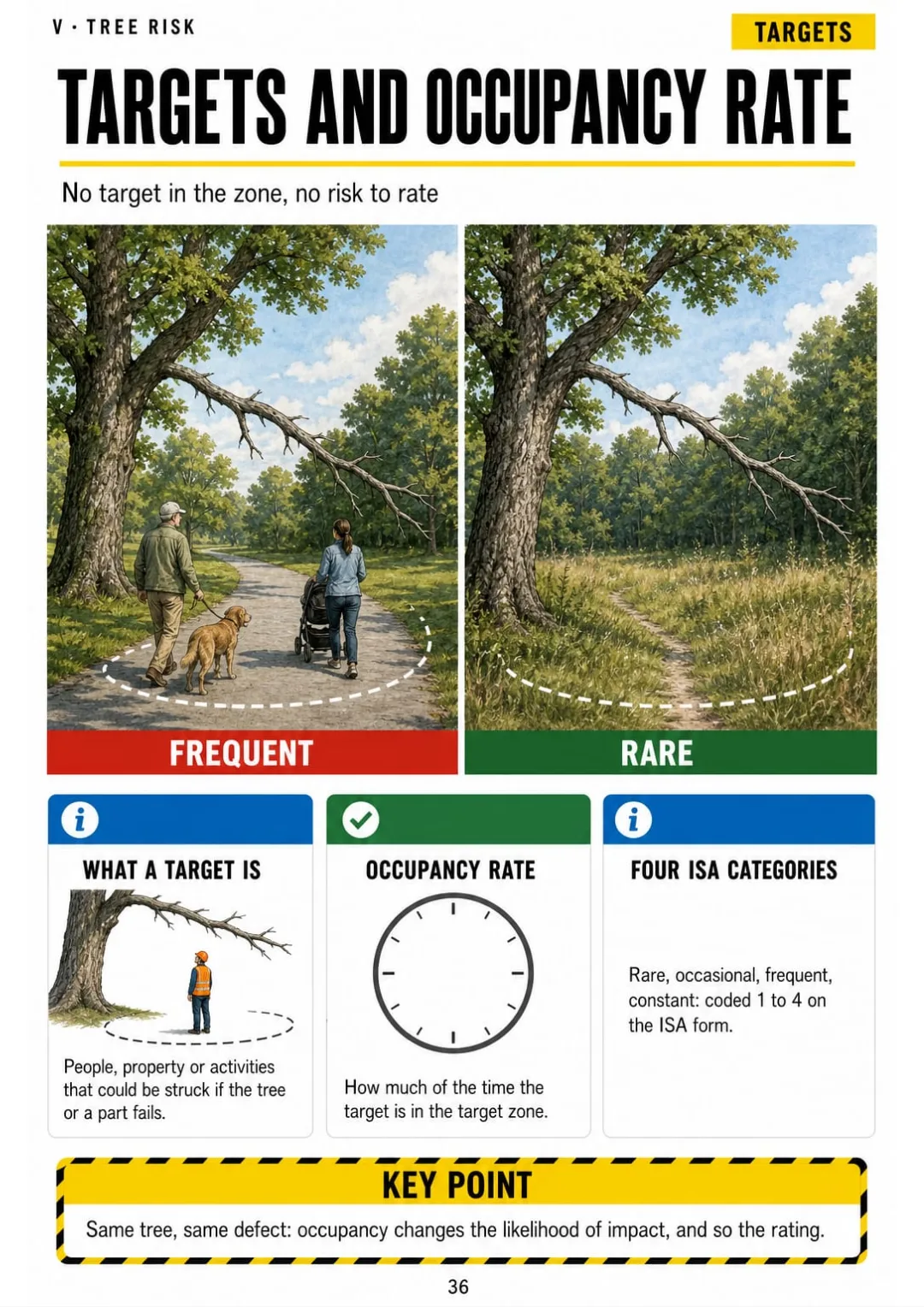
Occupancy: rare, occasional, frequent, constant, coded 1-4 on the ISA form.
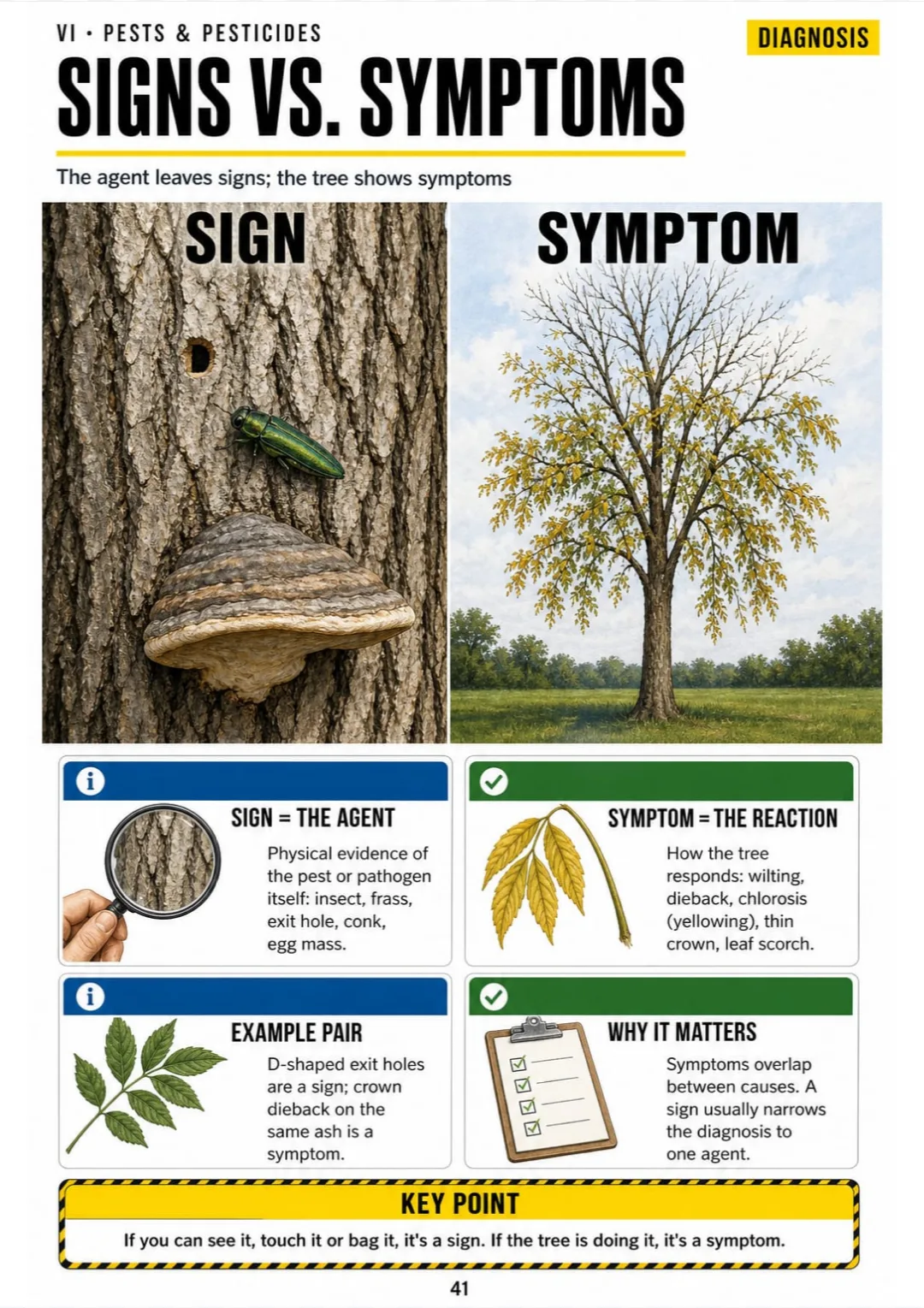
Frass, conks, exit holes = signs · wilting, dieback, chlorosis = symptoms
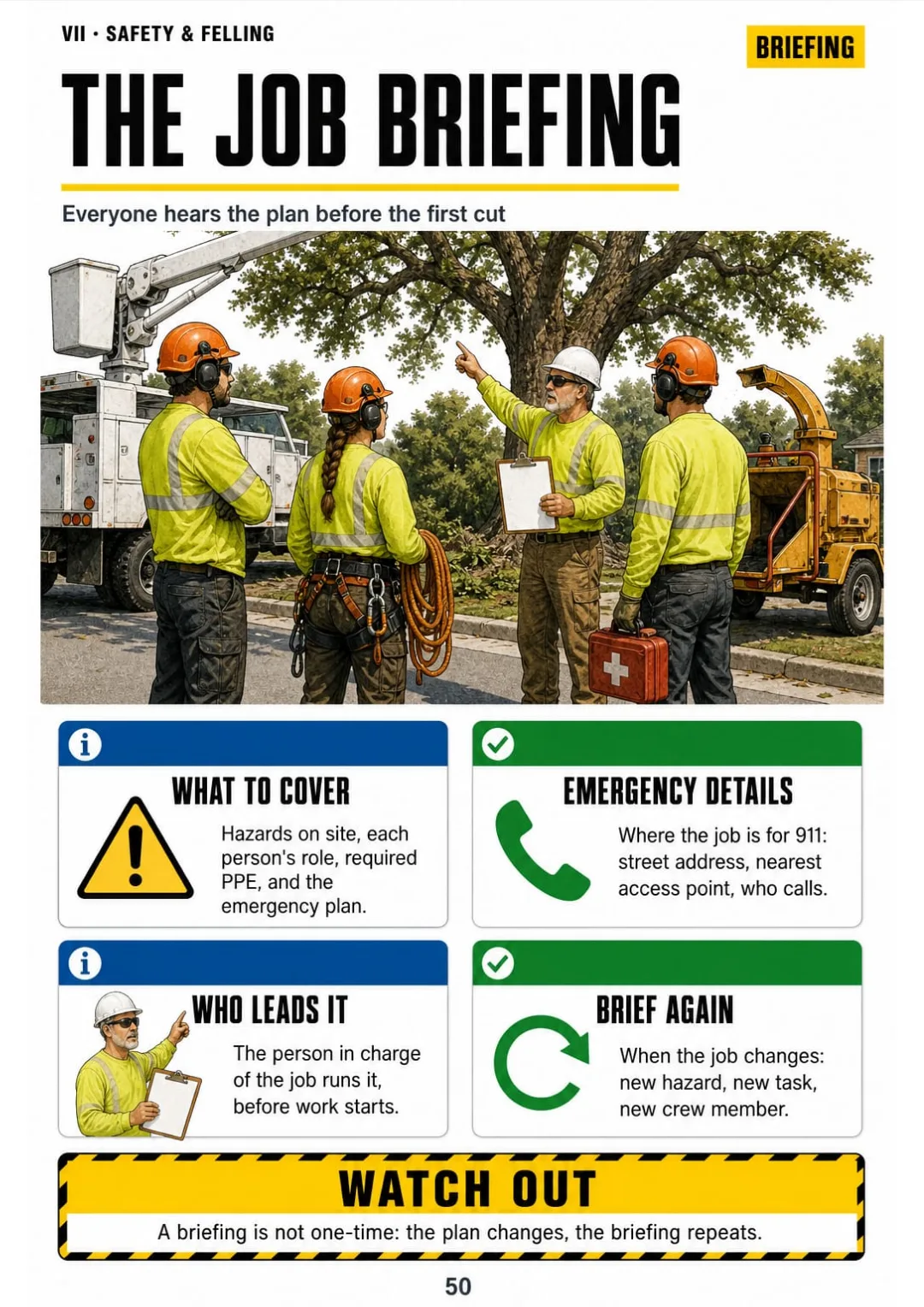
Job briefing: hazards, roles, PPE, emergency plan and 911 location, every job.
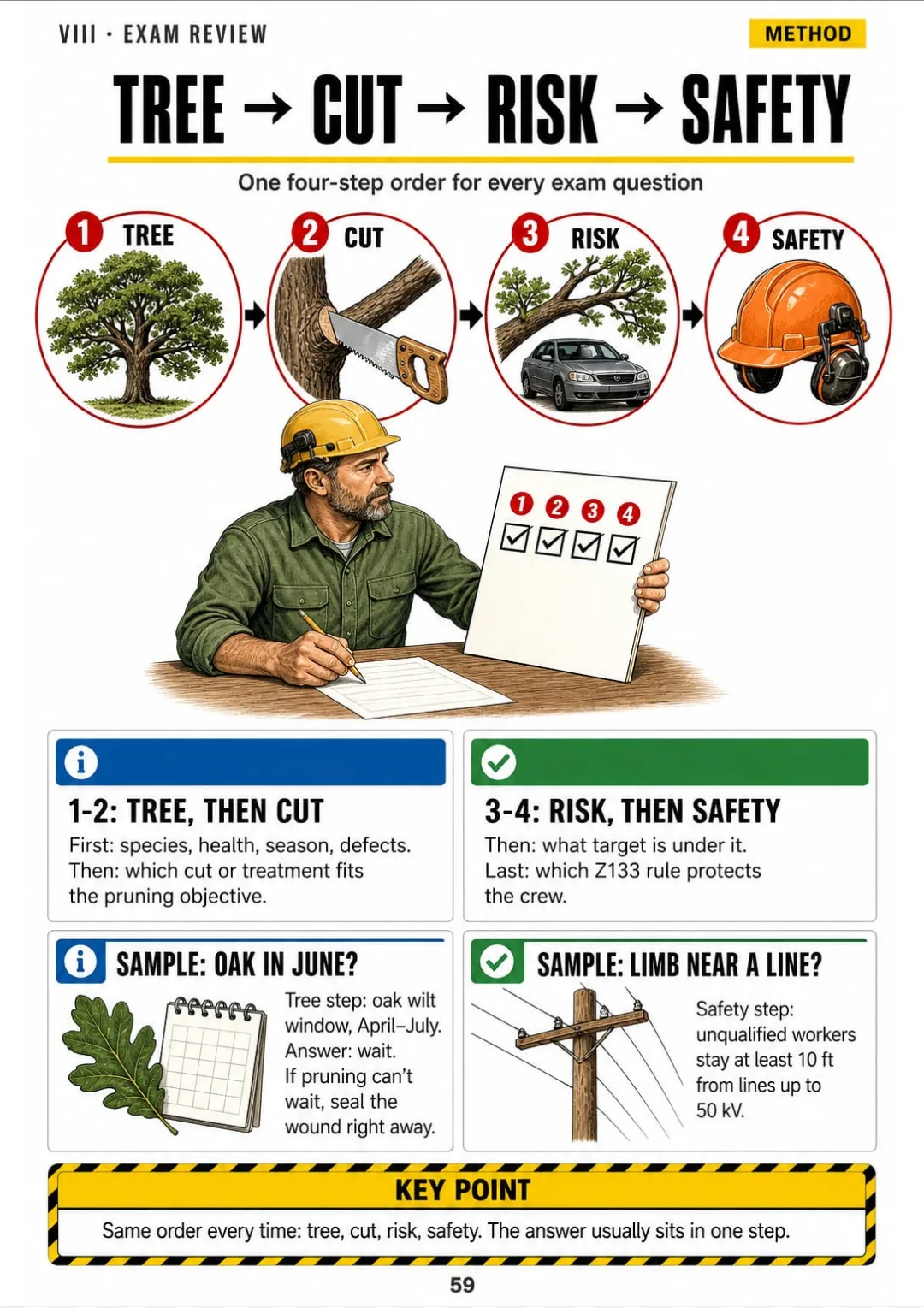
Tree → Cut → Risk → Safety: one order, two sample questions solved.

Swipe to see more →

These are real pages from the book. The table of contents is the full one: 8 parts and 60 topics.

The Problem Isn't You. It's How It Was Explained.

You're standing in a front yard where a contractor parked an excavator over the roots for a month. The oak is thinning at the top, and the homeowner asks you what the trucks did to the soil.

You know the ground is packed hard. But the study guide covers texture, structure, pore space and bulk density in four dense paragraphs, and by morning the terms run together. Nobody ever drew it for you.

Sand, silt, clay, pore space and bulk density: the soil terms on one page

In the book, soil gets one page: sand, silt and clay drawn by particle size, the pore space between them, and the same soil before and after it gets compacted. You see exactly where the air and water went.

The same goes for the branch collar, opposite vs. alternate buds, signs vs. symptoms, the risk rating and Z133 PPE: each one has its own page.

You understand it, you explain it to the homeowner, and you answer the exam question without going back to the guide.

COMPARE FOR YOURSELF

Same Topic, Two Ways to Study It

THIS
  • The study guide: line after line
  • Bud arrangements explained only in words
  • You walk into the exam still unsure
Leaf and bud arrangement constitutes a primary diagnostic characteristic in the dendrological identification of woody plants. In the opposite arrangement, two buds or leaves arise at the same node on opposing sides of the twig, whereas in the alternate arrangement a single bud or leaf arises at each node, the nodes being staggered along the stem. Northeastern taxa exhibiting opposite arrangement include Acer, Fraxinus, Cornus, members of the family Caprifoliaceae, and Aesculus; the majority of remaining genera exhibit alternate arrangement.
FOR THIS
  • Opposite vs. alternate in one drawing
  • The opposite-bud species in one box
  • You see it and you get it
Opposite buds = Maple, Ash, Dogwood, Caprifoliaceae, Horsechestnut. Almost everything else is alternate.
CONTENTS

Take a Look at the 8 Parts and 60 Topics

How a tree works, ID and measurements, soils and planting, pruning cuts and A300 terms, tree risk assessment, pests and pesticide math, job safety and felling, and a final exam review: 64 pages, all illustrated

IHow a Tree Works · pp. 5-12
  1. Inside the Trunk: Bark, Phloem, Cambium, Xylem
  2. Annual Rings: Earlywood and Latewood
  3. Photosynthesis and Respiration in One Picture
  4. Stored Energy: Where the Tree Keeps Its Reserves
  5. Buds, Shoots and How a Tree Grows
  6. Roots: Where They Really Are
  7. Water Movement: From Soil to Leaf
  8. CODIT: How a Tree Walls Off Decay
IITree ID and Tree Measurements · pp. 13-18
  1. Opposite vs. Alternate: The First ID Split
  2. Leaf Shapes and Margins the Exam Uses
  3. Oaks: Red Group vs. White Group
  4. Maples Side by Side
  5. Conifers of the Northeast
  6. Measuring a Tree: DBH, Height, Crown
IIISoils, Planting and Root Protection · pp. 19-24
  1. Soil Texture, Structure and Compaction
  2. Soil pH and Nutrients
  3. Planting Right: The Root Flare at Grade
  4. Mulch: 2-4 Inches, Never a Volcano
  5. Girdling Roots and Buried Flares
  6. Tree Protection Zone on Construction Sites
IVPruning Cuts and A300 Terms · pp. 25-33
  1. Branch Collar and Branch Bark Ridge
  2. The Three-Cut Method for Heavy Limbs
  3. Reduction Cut vs. Removal Cut vs. Heading Cut
  4. Pruning Objectives Come First
  5. Pruning Types: Clean, Thin, Raise, Reduce
  6. How Much Live Crown to Remove
  7. Structural Pruning of Young Trees
  8. Codominant Stems and Included Bark
  9. Cabling and Bracing Basics
VTree Risk Assessment · pp. 34-40
  1. Risk = Failure × Impact × Consequences
  2. The Three Levels of Assessment
  3. Targets and Occupancy Rate
  4. Defects in the Crown
  5. Decay, Cavities and Conks
  6. Root and Lean Defects
  7. Mitigation Options and the Written Report
VIPests, Diseases and Pesticide Math · pp. 41-48
  1. Signs vs. Symptoms
  2. Integrated Pest Management (PHC/IPM)
  3. Emerald Ash Borer
  4. Spotted Lanternfly and Hemlock Woolly Adelgid
  5. Diseases: Oak Wilt, Dutch Elm, Beech Leaf Disease
  6. Abiotic Problems Mistaken for Disease
  7. Reading a Pesticide Label
  8. Pesticide Math: Rate per Gallon and per 1,000 sq ft
VIIJob Safety, Climbing, Rigging and Felling · pp. 49-58
  1. PPE Under ANSI Z133
  2. The Job Briefing
  3. Electrical Hazards and Minimum Approach Distance
  4. Chainsaw Safety and Kickback
  5. Climbing Systems and Tie-In Points
  6. Knots Every Arborist Is Asked About
  7. Rigging Basics and Shock Loads
  8. The Felling Notch and Hinge
  9. Escape Routes and the Drop Zone
  10. Chipper and Aerial Rescue
VIIIExam Review · pp. 59-64
  1. How to Read Each Question: Tree → Cut → Risk → Safety
  2. Numbers to Know on One Page
  3. Terms That Get Mixed Up
  4. Most Common Field Mistakes, Drawn
  5. Check Your State's Requirements
  6. Last-Week Review Checklist

One Page, One Topic, All Clear

Think of it this way:

The exam shows a heavy limb and asks where the final cut goes. Or a homeowner points at a big maple branch and asks why you won't cut it flush to the trunk.

In the book you open the branch collar page and it's drawn: the branch bark ridge, the swelling of the collar, and the final cut just outside it. No flush cut, no stub.

Occupancy: rare, occasional, frequent, constant, coded 1-4 on the ISA form.

Same with the three-cut method, the felling notch and hinge, signs vs. symptoms, the risk matrix and minimum approach distance: each one on its own page.

Licensed Tree Expert Illustrated is 8 parts and 60 topics, all drawn, and it ends with an exam review: how to read each question, the numbers to know and a last-week checklist.

What you see drawn, you don't have to memorize.

What's Inside Licensed Tree Expert Illustrated:

Ipp. 5-12

How a Tree Works

How a tree works, drawn layer by layer: bark, phloem, cambium and xylem, rings, photosynthesis, stored energy, buds, roots, water movement and CODIT. The biology questions stop being a list of names.

IIpp. 13-18

Tree ID and Tree Measurements

Opposite vs. alternate, leaf shapes and margins, red and white oaks, maples side by side, northeastern conifers and how to measure DBH, height and crown.

IIIpp. 19-24

Soils, Planting and Root Protection

Soil texture, structure and compaction, pH and nutrients, planting at the root flare, mulch depth, girdling roots and the tree protection zone.

IVpp. 25-33

Pruning Cuts and A300 Terms

Where every cut goes and why: branch collar and branch bark ridge, the three-cut method, reduction vs. removal vs. heading cuts, pruning objectives, live crown limits, young trees, codominant stems and cabling.

Vpp. 34-40

Tree Risk Assessment

Turn a defect into a rating you can defend: the two risk matrices, the three levels of assessment, targets and occupancy, crown, decay, root and lean defects, and mitigation with the written report.

VIpp. 41-48

Pests, Diseases and Pesticide Math

Signs vs. symptoms, PHC/IPM, emerald ash borer, spotted lanternfly, hemlock woolly adelgid, oak wilt, Dutch elm, beech leaf disease, abiotic problems, the pesticide label and the math.

VIIpp. 49-58

Job Safety, Climbing, Rigging and Felling

The pages to keep in the truck: PPE under Z133, the job briefing, electrical hazards, chainsaw kickback, climbing systems, knots, rigging and shock loads, the felling notch and hinge, escape routes, chipper and aerial rescue.

VIIIpp. 59-64

Exam Review

How to read each question in order, the numbers to know on one page, mixed-up terms, common field mistakes, where NJ, Maryland and Connecticut publish their license requirements, and a last-week checklist.

At the end of the book: An exam review with the numbers to know on one page, mixed-up terms, solved sample questions and a last-week checklist.
Plus: 2 Free Books

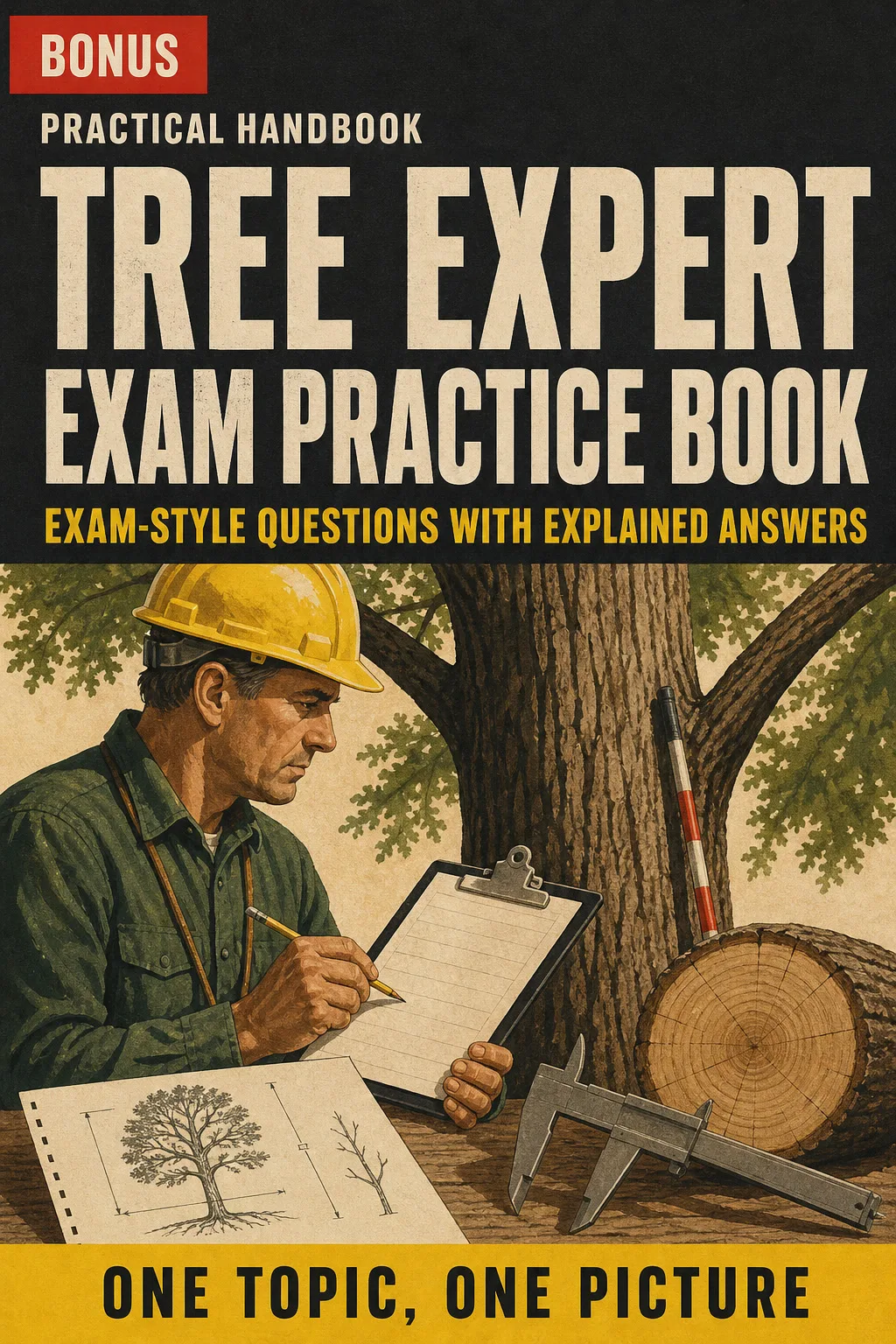
Tree Expert Exam Practice Book: Exam-Style Questions with Explained Answers

BONUS 1: «Tree Expert Exam Practice Book: Exam-Style Questions with Explained Answers»

Value on its own: US$ 17.90

Test yourself topic by topic and see why each answer is right, so you know where you stand before exam day.

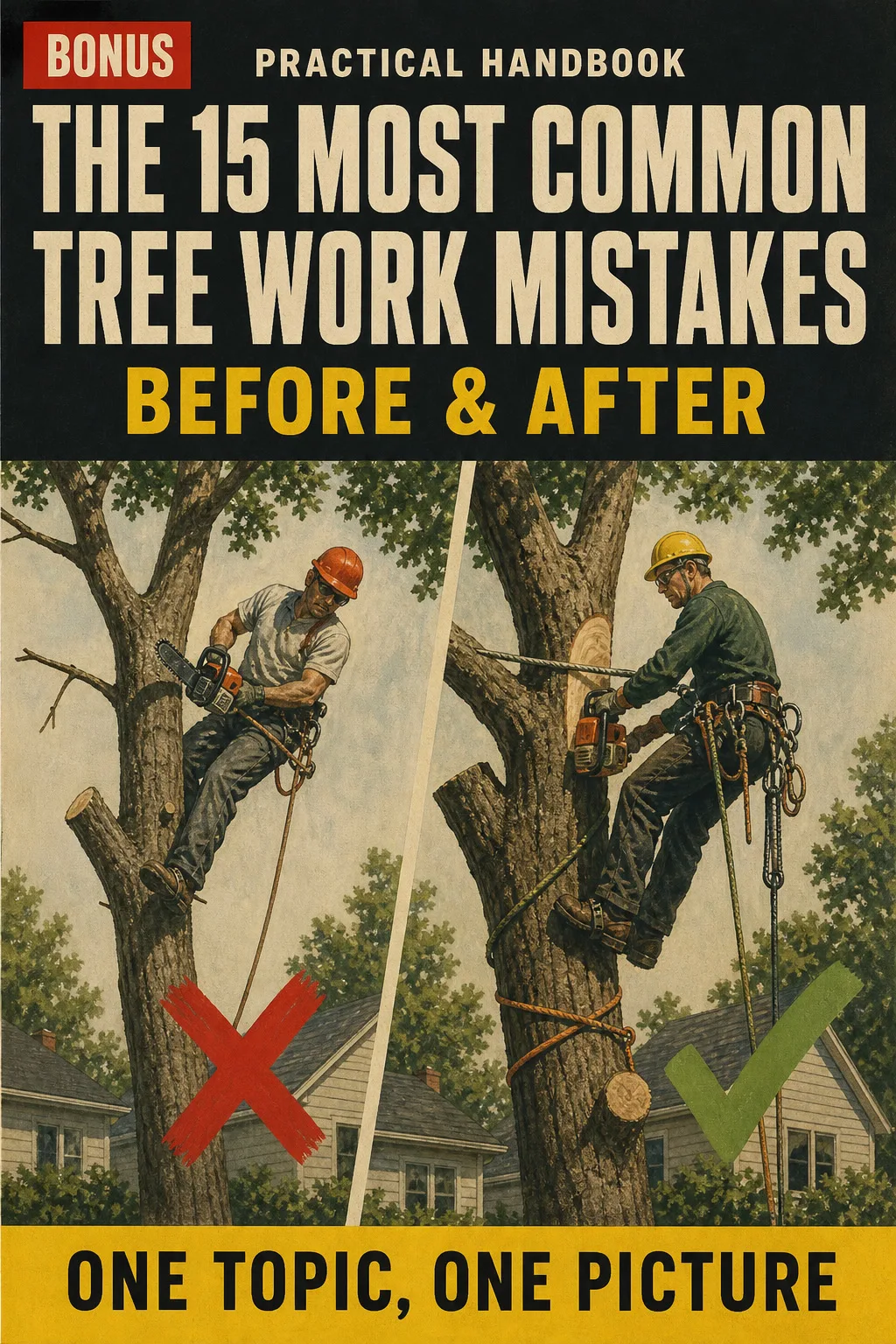
The 15 Most Common Tree Work Mistakes: Before & After

BONUS 2: «The 15 Most Common Tree Work Mistakes: Before & After»

Value on its own: US$ 14.90

Flush cuts, volcano mulch, buried root flares, bad hinges: each mistake drawn next to the right way, for a quick review.

Licensed Tree Expert Illustrated with 2 Free Books

  • Licensed Tree Expert Illustrated: 64 illustrated pagesUS$ 63
  • BONUS 1: Tree Expert Exam Practice Book: Exam-Style Questions with Explained AnswersUS$ 17.90
  • BONUS 2: The 15 Most Common Tree Work Mistakes: Before & AfterUS$ 14.90
  • High-resolution PDF to printIncluded
Total value US$ 95.80
YOUR PRICE:
US$ 27
You save US$ 68.80
YES, I WANT LICENSED TREE EXPERT ILLUSTRATED FOR US$ 27

📄 This is a digital PDF book sent to your email: nothing is printed or shipped.

Secure purchaseEncrypted payment30-day guarantee

PDF by email: We email you Licensed Tree Expert Illustrated as a PDF, together with the two free books. It's a single payment: no installments, no extra charges.

Who This Book Is For

You're studying for the license

You're studying for the license

You read one page a night: the drawing first, then the few lines that go with it. The exam terms finally match what you already do with your hands.

Your exam date is close

Your exam date is close

The review part puts the numbers on one page and solves sample questions in one order: tree, cut, risk, safety. You go through it in the truck between jobs.

You already run the crew

You already run the crew

Print the pages and keep them in the truck. When a client asks about a flush cut or a cracked leader, you show the drawing and explain it in the right words.

Everything You Get Today

US$ 95.80US$ 27
YES, I WANT LICENSED TREE EXPERT ILLUSTRATED FOR US$ 27

📄 This is a digital PDF book sent to your email: nothing is printed or shipped.

30DAYS
GUARANTEE

30-Day Guarantee

Try Licensed Tree Expert Illustrated for 30 days, bonus books included.

We refund everything if the file won't open, if the book isn't what you see here, if you were charged twice or if the email doesn't arrive. Just email us.

You pay once. No subscriptions.

Frequently Asked Questions

Does it work for my state, and is it for me if I've been working trees for years?

It covers the topics that state tree expert and arborist license exams test, such as the New Jersey and Maryland Licensed Tree Expert exams and the Connecticut arborist license: tree biology, ID, soils, pruning, risk, pests, pesticides and safety. Tree ID and pests focus on northeastern species. Each state sets its own requirements, so the last part shows you where to check yours. If you've been working trees for years and haven't taken a written exam in a while, it's built for you.

Where does the content come from?

From ANSI A300, ANSI Z133, the ISA Best Management Practices for Tree Risk Assessment, EPA pesticide label requirements and the study material published by state boards (e.g., NJ, Maryland, Connecticut). Standards get revised, so every safety distance, pesticide rate and state requirement is flagged right on the page: check it against the current official edition before your exam.

Is this official material?

No. It's an independent illustrated study book, not published or endorsed by any state board, ANSI, ISA, OSHA or the EPA. It doesn't give you a license, a certificate or ISA CEUs: it's what you study with.

Does it replace the course or required training?

No. It doesn't replace required training, supervised field experience, climbing and safety training, or your state's official study material. It helps you understand and review it.

Are the practice questions the ones on the exam?

No. They're written for this book to help you practice topic by topic. They aren't official questions from any exam.

When and how do I get it?

As a PDF by email, sent to the address you enter at checkout. The 2 bonus books come the same way.

Do I have to pay every month?

No. It's a one-time payment. No subscription.

Can I get it on paper?

You can print it yourself. The PDF is laid out one topic per page, so you can print just the pages you need and keep them in the truck.

How does the refund work?

You have 30 days. We refund everything if the file won't open, if the book isn't what you see on this page, if you were charged twice or if the email doesn't arrive: just email us.

Before You Close This Page

No more rereading the study guide with nothing sticking.

The branch collar, the hinge, the risk matrix: you see them drawn and you've got it.

You walk into the exam knowing where everything is.

Drawings make studying faster.

The book is right below.

One-time payment: US$ 27 · Guarantee: 30 days · PDF by email

YES, I WANT LICENSED TREE EXPERT ILLUSTRATED FOR US$ 27

📄 This is a digital PDF book sent to your email: nothing is printed or shipped.